
Why Companies Keep Raising Prices Even After Inflation Falls
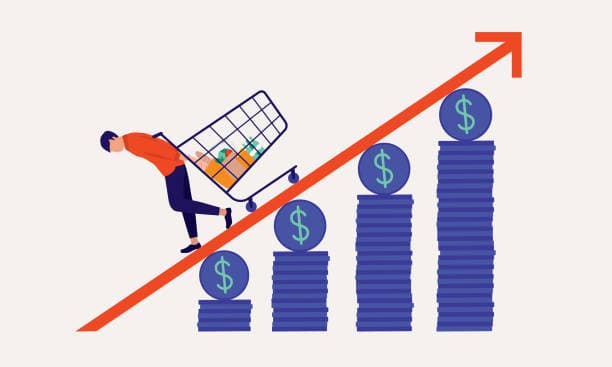
The article explains why many companies continue increasing prices even after inflation has fallen, using McDonald's as the main example. It highlights how businesses use pricing power, brand loyalty, and consumer behavior to maintain higher prices and increase profits. The article also discusses strategies like gradual price increases, shrinkflation, and menu engineering that make higher prices feel normal. As a result, consumers face reduced purchasing power and greater financial pressure despite lower inflation. It concludes that informed consumer choices are the strongest force in influencing market pricing.
Introduction
Every business has a cost structure what it spends to produce its product or service. And every business has a price what it charges you for that product. The gap between the two is the profit margin.During the inflation surge of 2021 and 2022, costs genuinely did rise. Ingredients got more expensive, fuel for delivery trucks cost more, wages went up and companies had a legitimate reason to raise prices their expenses had increased and they needed to protect their margins. But here is where things get interesting. When those input costs started coming down when commodity prices eased, shipping fees dropped, and supply chains stabilized many companies chose not to pass those savings back to customers. Instead, they kept prices where they were, or in some cases pushed them even higher. McDonald's is a textbook example. Between 2019 and 2024, the average price of a McDonald's meal in the United States rose by over 40%. By 2024, the company was reporting record-breaking profit margins even as the inflation that originally triggered the price hikes had largely subsided. The costs came down. The prices did not.
When costs go up, prices go up fast. When costs come down, prices tend to stay right where they are. That asymmetry is not an accident it is a strategy.
Consumer Demand and the Willingness to Pay
A price only holds if people keep paying it. So why are consumers still walking through the door?
The answer lies in something behavioural economists call price anchoring. Once a consumer pays a certain amount for something regularly, that price becomes their new normal. A burger that used to cost five dollars felt expensive at seven. But once it hit seven and stayed there for a year, nine dollars felt like just another small jump. The reference point shifted.
McDonald's understood this deeply. They did not raise prices all at once. They did it gradually a few cents here, a small adjustment there allowing customers to adjust mentally at each step without triggering a sharp reaction. By the time the total increase became significant, most customers had already accepted the new normal without realising how far they had come from the original price.
Demand does not disappear just because prices go up especially when the product solves a real problem in people's lives. That's the foundation of pricing power.
How Companies Lock In Higher Prices and Keep Them
One of the most common tactics is shrinkflation keeping the price the same but quietly reducing the portion size or product quantity. A bag of chips that once weighed 200 grams now weighs 170 grams at the same price. A McDonald's burger that once had a slightly thicker patty has been subtly adjusted. Consumers rarely notice immediately because the packaging looks identical and the price tag has not moved. But the effective cost per gram has gone up.
Menu Engineering
McDonald's has invested heavily in menu engineering the science of designing what you see, in what order, and at what price, to guide your purchasing decisions. Value meals are structured to make you feel you are getting a deal compared to buying items separately, even when the meal price itself has risen. Limited-time offers create urgency. Premium items anchor the menu at the top, making mid-range items feel reasonable by comparison.
Brand Loyalty as a Pricing Shield
Decades of marketing have made McDonald's a global habit. For millions of people, it is not just food it is comfort, familiarity, and consistency. That emotional connection acts as a buffer against price sensitivity. When customers feel attached to a brand, they are far more likely to absorb a price increase than switch to an alternative. McDonald's has spent billions building exactly that kind of loyalty, and it pays dividends every time they adjust their menu prices upward.
The Bottom Line: Who Carries the Cost?
Companies like McDonald's used a period of genuine inflation to reset consumer price expectations. When the inflation eased, they kept the new prices in place, protected by brand loyalty, behavioural psychology, and the simple fact that most consumers had already adjusted their expectations. The result was record profits for the business and continued financial pressure for the customer.
In many ways, it is simply smart business. But as consumers, understanding the mechanics behind it matters. When you know that prices rarely fall on their own once raised, you can make smarter choices cooking more at home, comparing options, or simply being more deliberate about where and how you spend.