
What Happens During a Recession
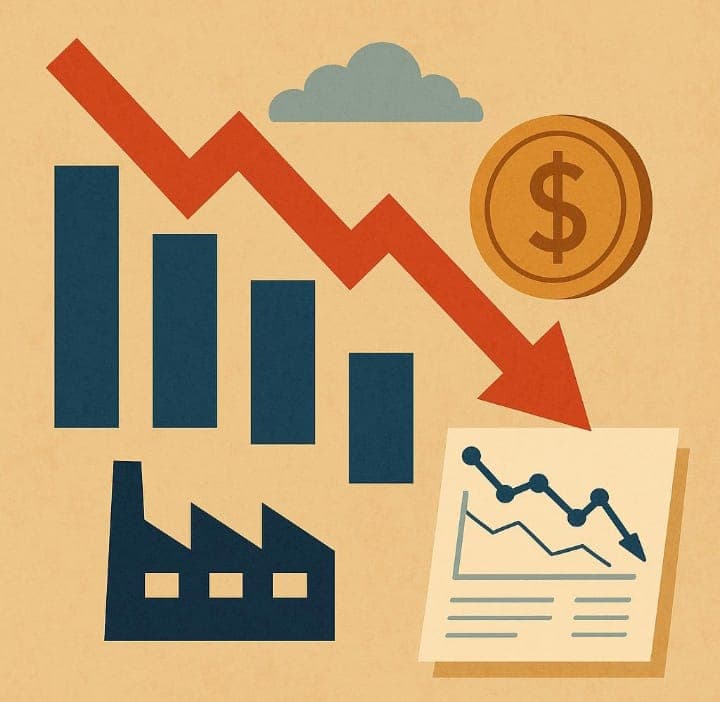
A recession is a period of significant economic decline that affects businesses, employment, and consumer spending. Companies often experience lower sales and profits, which can lead to layoffs and business closures. As unemployment rises, people reduce their spending and focus on essential needs. Governments respond through measures such as lowering interest rates, reducing taxes, and increasing public spending to support the economy. Individuals can prepare by saving money, reducing debt, and creating additional sources of income.
Introduction
Recession is a substantial reduction in economic activity that affects the entire economy for several months, typically evident in production, employment, real income, and various other indicators. A recession starts when the economy hits its peak of activity and concludes when it reaches its lowest point. An economy may exhibit signs of decline several months prior to the onset of a recession;
however, accurately determining if a country is genuinely experiencing a recession can be a lengthy process.
What causes a Recession
There are various factors that can lead to recessions. Some are linked to sharp fluctuations in the prices of the resources utilized in the production of goods and services. For instance, a significant rise in oil prices may signal an impending recession. As energy costs rise, it elevates the overall price levels, subsequently causing a drop in aggregate demand. Additionally, a recession may be initiated by a nation's choice to curb inflation through restrictive monetary or fiscal measures. When these strategies are applied too rigorously, they can diminish demand for goods and services, ultimately triggering a recession.
Impact of Recession on Businesses
Recession significantly impacts the economy and businesses, companies often experience decreases in sales and profits amid a recession. Industries that are cyclical, such as manufacturing and tourism, frequently see particularly severe drops. Firms with substantial fixed costs may suffer disproportionately as their revenues fall. The decline in consumer demand diminishes anticipated returns on investments in advertising and marketing, leading to reductions in spending. Businesses that cannot secure refinancing might struggle with fixed debt obligations that need to be fulfilled despite declining sales and profits, potentially leading to an increase in business bankruptcies.
Effect on Jobs and Income
Economic downturns bring hardship. Individuals may find themselves unemployed, and families often face challenges in generating sufficient income to purchase essential goods and services. Moreover, recessions have historically been associated with and typically lead to higher levels of unemployment. A notable instance of widespread unemployment linked to a recession is the Great Depression. In the early months following the World Health Organization's (WHO) declaration of the COVID-19 pandemic, unemployment soared to nearly 15%.
Shift in Consumer Behaviour
During period of recession, consumer behavior is shaped not only by a decrease in disposable income but also by profound psychological reactions. A key trend observed in recessions is the transition from high-end products to more economical options. For instance, shoppers who once favored organic or luxury items might start selecting products that are budget-friendly or from store brands.
A study conducted by McKinsey found that 30% of consumers turned to lower-priced options during economic downturns, with a significant number continuing to prefer those brands even post-recovery.
Government Interventions:
Recession has a significant detrimental effect on society. Consequently, when recessions occur, governments act swiftly rather than waiting for the economy to recover on its own. Depending on the underlying reasons for the recession, government implement policies aimed at boosting demand or supporting supply. To enhance credit accessibility and promote borrowing and investment, the government might reduce interest rates. They also lower tax rates to boost disposable income and encourage consumer spending. Additionally, the government might amplify its expenditures to directly elevate aggregate demand, often funded through the issuance of government debt.
Individual Preparedness Strategies
Recessions are significant disturbances that greatly affect various segments of society, evolving from immediate financial crises into enduring economic difficulties. Ensure that your emergency savings are adequately funded, ideally enough to sustain you for at least 3 to 6 months of expenses. Focus on eliminating debt, particularly if it has a high interest rate, as this will facilitate managing monthly costs should your income decrease. Evaluate your purchases thoughtfully and reassess your budget to eliminate any non-essential expenses. Establish multiple income streams, which could be as straightforward as starting a dog-walking venture or taking a part-time role at a neighborhood grocery store. Investigate how your hobbies or interests could potentially be monetized during an economic downturn. Although worrying is unproductive, it’s vital to maintain hope while preparing for potential challenges during economic hardships. In the face of increasing uncertainty and unprecedented events, take proactive steps to get ready for unforeseen difficulties to alleviate stress.