
Venezuela’s Economic Challenges: Debt, Oil, and Human Impact
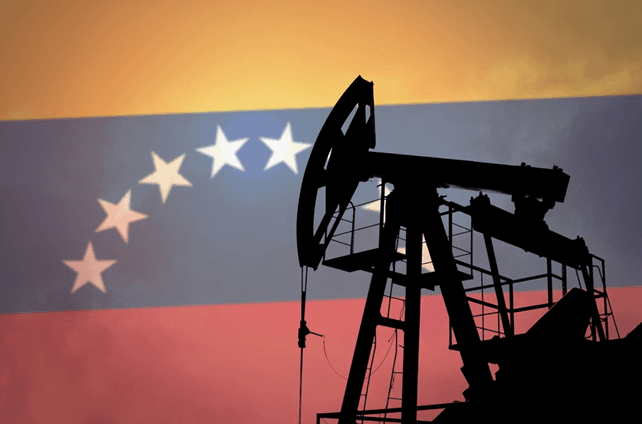
An overview of how Venezuela’s economic crisis, driven by debt, collapsing oil production, and mismanagement, has created severe financial instability and widespread humanitarian impacts.
Introduction
Venezuela is a country that has traditionally been a generous host to refugees, but it’s now facing one of the largest displacement crises in the world. Rampant violence, inflation, gang warfare, soaring crime rates, and shortages of food, medicine and essential services are forcing millions to flee. Nearly 8 million Venezuelans are displaced globally. It is the home to the world’s largest oil reserves but has caused a dangerous boom and bust ride that offers lessons for other resource-rich states. Decades of poor governance has driven what was once one of Latin America’s most prosperous countries to economic and political ruin.
In recent years, Venezuela has suffered economic collapse, with output shrinking significantly and the strongest hyperinflation contributing to a scarcity of basic goods. Meanwhile, government mismanagement and U.S. sanctions have led to a drastic decline in oil production and severe underinvestment in the sector. The oil price plunged from more than $100 per barrel in 2014 to under $30 per barrel in early 2016, which sent Venezuela into an economic and political spiral, and despite rising prices since then, conditions remain bleak. Oil revenues have financed almost two-thirds of the government’s budget. Estimates for 2024 place this figure slightly lower, at 58%. Falling production, decrease in investment and maintenance, and oil output has declined hitting its lowest level in decades.
Venezuela’s GDP shrank by roughly three quarters between 2014 and 2021. They also have an estimated debt burden of $150 billion or higher, with annual inflation at 190% in 2023 according to the central bank. Venezuela now struggles with a combination of high external debt, low oil production, and runaway inflation. These forces not only undermine financial stability but also have deep humanitarian impacts such as eroding livelihoods, shrinking opportunities, and driving mass migration. The crisis is a reminder of how economic mismanagement and structural vulnerabilities can devastate a nation.
Sovereign Debt & Financial Outlook
Following years of economic crisis and U.S sanctions that severed the country from international capital markets, Venezuela defaulted in late 2017 after missing payments on international bonds issued by the government and state oil company, Petroleos de Venezuela (PDVSA). Since then, accumulated interest and legal claims tied to past expropriations have added to unpaid principal, swelling total external liabilities far beyond the face value of the original bonds. Venezuela’s distressed debt has rallied since U.S. President Donald Trump came to power in January 2025 as speculators bet on the possibility of political change.
According to analysts, Venezuela has about $60 billion of defaulted bonds outstanding. However, total external debt including PDVSA obligations, bilateral loans, and arbitration awards stand at roughly $150–$170 billion. These obligations are higher than the estimated nominal GDP of roughly $82.8 billion in 2025, implying a debt-to-GDP ratio near 180–200%. These high ratios show deep financial stress, attracting regular investor concern. International markets have been seeking interests to engage with Venezuela’s debt. Bonds trade at discounted prices, showcasing ongoing uncertainty. Despite the rally, risks remain high. Ongoing U.S. sanctions, political uncertainty, complex legal claims, and the likelihood of deep debt restructuring continues to cloud the outlook. While creditors from hedge funds to foreign governments and arbitration award holders are pushing for recovery payments, complicating restructuring negotiations.
Oil Production & Economic Revenue
Venezuela holds the world’s largest proven oil reserves, about 17% of the global total, more than Saudi Arabia’s 267 billion. Yet Venezuela produces fewer than 1 million barrels per day, less than 1% of the global output. It’s the result of political decisions, economic sanctions, and the sheer difficulty of extracting Venezuela’s heavy crude. While Venezuela still has massive amounts of proven reserves, it lacks a functioning system to extract, process and ship it.
Over the past two decades, that system has all but fallen apart, based on decisions inside and outside the country. U.S. restrictions on Venezuela led to a failure to cooperate on anti-drug and counterterrorism efforts. Such factors led to a sanction being released in 2017, when Trump cut off the Venezuelan government and PDVSA from U.S. financial markets. The restrictions removed access to capital markets, scared away potential investors, and forced Venezuela to sell through ‘shadow fleets’ to China at steep discounts. China now receives about 80% of Venezuela’s exports and has lent close to $50 billion.
The future of Venezuela’s oil industry depends on political development. The infrastructure alone would require $8 billion just to return to the previous high production levels but due to low economic revenue and high debt levels, it would be very difficult for Venezuela to rebuild its oil industry. The sanctions have depressed foreign exchange earnings, exacerbated a scarcity of hard currency, and reduced revenues needed for public services and imports. Even when crude is exported, heavy discounts are often required to attract buyers, reducing the value Venezuela earns per barrel. Underinvestment, sanctions, and infrastructure challenges have limited oil production, and these constraints affect Venezuela’s revenues and economic recovery. The result is an economic cycle in which low production and weak revenues perpetuate fiscal strain.
Macroeconomic & Human Impact
The oil dependency, mismanagement, corruption, and sanctions has also brought upon a macroeconomic crisis in Venezuela. This has triggered a severe humanitarian disaster, causing mass emigration, widespread hunger, collapsing services, hyperinflation, and a lot of human suffering. This has turned Venezuela from a wealthy nation to one of the most impoverished.
Venezuela’s GDP has increased by over 80% in under a decade due to mismanagement, corruption, and declining oil production. The economy’s heavy reliance on oil has made the prices and production fall leading to economic recession. The country has experienced extreme inflation, estimated at 180% in 2025, making life in Venezuela unaffordable. U.S. sanctions deter investment, hinder oil sector recovery, and worsen economic prospects. Moreover, government actions to preserve foreign reserves are adding to inflationary pressures.
Over 7 million people have fled to Latin America, creating a major regional refugee crisis. Many households have been lacking income for basic food, leading to food insecurity. There are severe shortages of food, water, medicine, and fuel, alongside disrupted education and limited healthcare access. The workforce has also been depleting, limiting the potential for recovery. The government's violent repression of opposition destabilizes the country and exacerbates suffering.
Conclusion
In conclusion, Venezuela’s economic crisis is spiraling into a combination of heavy debt, collapsing oil production, and chronic inflation, which highlights the dangers of overreliance on a single export commodity with weak governance. As debt negotiations and production remain constrained, the people of Venezuela are facing severe financial instability. Addressing these complex challenges will require economic reform, international engagement, and sustained efforts to rebuild confidence among investors and citizens alike.