
The Financial Ripple of the 2023 Turkey - Syria Earthquake
A concise overview of how the 2023 Turkey - Syria earthquake reshaped economies through destruction, recovery, and long-term resilience.
The Earthquake
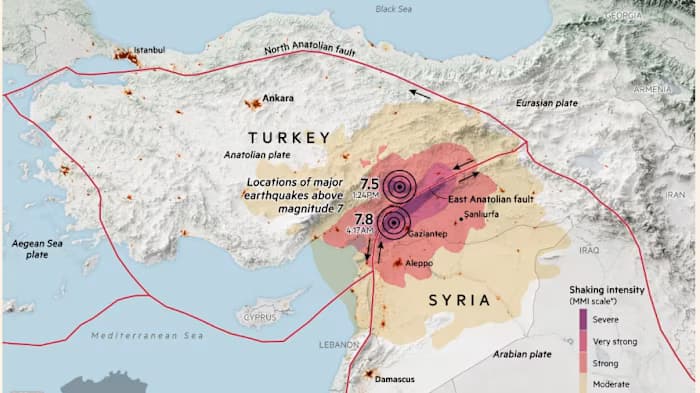
The Turkey–Syria earthquake of February 2023 had devastating effects on lives and infrastructure that still last to this day. Striking with a magnitude of 7.8 near Gaziantep, Turkey, and followed by severe aftershocks, the disaster killed over 55,000 people and injured nearly 130,000, mostly in densely populated cities where buildings were often not earthquake-resistant.
Entire neighborhoods and critical infrastructure collapsed or sustained irreversible damage. Some towns in Syria were reduced to rubble, increasing hardships in an already war-torn environment. Millions became homeless, forced to endure the harsh winter in makeshift shelters. Disrupted water and sanitation systems worsened both health and psychological crises.
Turkey’s economy lost an estimated $34.2 billion, while Syria lost around $5.2 billion. Recovery remains slow, with hundreds of thousands still living in temporary settlements and facing poverty. The aftermath highlights the immense challenge of rebuilding infrastructure amid natural disasters, conflict, and economic hardship.
GDP and Inflation
Rebuilding costs from the earthquake negatively impacted GDP in both countries, particularly in Turkey, where direct damages reached $34.2 billion, equivalent to roughly 4% of annual GDP. Disaster-affected regions accounted for nearly 10% of national GDP, and their destruction triggered economic contraction and lost productivity. Some estimates suggest an overall GDP loss of up to 11%. Syria, already weakened by years of conflict and economic decline, experienced an additional GDP reduction of approximately 2.3 percentage points, further limiting prospects for future growth.
The reconstruction process also fueled inflationary pressures throughout 2023 and beyond. Massive government spending strained Turkey’s fiscal capacity, pushing inflation higher. The CBRT’s year-end inflation forecast for 2023 exceeded 22%, while some experts projected 35–50%, with monthly inflation surpassing 6% in early 2023. Increased demand for materials, currency depreciation, and supply shortages intensified price pressures. Similar inflationary trends emerged in Syria, driven by higher costs of imported reconstruction materials, basic goods, and essential services, further eroding living standards and purchasing power.
Aid and Funding
International organizations played a vital role in coordinating humanitarian aid and relief, mobilizing search and rescue teams, distributing essential supplies, and supporting local agencies. The United Nations led multi-agency coordination, releasing emergency funds and launching appeals exceeding $1 billion for Turkey and nearly $400 million for Syria. Over 100 countries and numerous organizations pledged support. NGOs such as UNICEF and Direct Relief provided on-the-ground assistance, including healthcare, shelter, and specialized services.
Relief funding enabled rapid deployment of emergency shelters, food aid, health interventions, and longer-term initiatives like livelihood restoration and infrastructure rebuilding. However, donor fatigue, particularly toward Syria due to conflict and sanctions, slowed funding flows, raising concerns about sustainability and adequacy of aid.
Insurance and Financial Response
Insurance markets faced one of their largest catastrophe losses. The Turkish Catastrophe Insurance Pool (TCIP) and private insurers delivered over $6.2 billion in payouts for residential and commercial losses. These payouts accelerated reconstruction and reduced the financial burden on households and businesses.
Rapid claims processing, inflation-linked coverage, and strong reinsurance backing demonstrated resilience within Turkey’s insurance sector. However, coverage gaps, especially in rural areas and across Syria, highlight the need for insurance expansion and reform to better manage future disaster risks.
New Opportunities in Material Sectors
Post-earthquake reconstruction projects created significant opportunities in both real estate and materials sectors. Demand surged for earthquake-resistant housing, driving price increases of up to 50% in some cities due to housing shortages and heightened focus on safety standards. New constructions compliant with updated building codes command price premiums of 15–30% over older stock. Migration from heavily impacted areas boosted demand in safer regions, attracting increased investor interest.
The materials sector, particularly cement, steel, glass, and insulation, experienced rapid growth. Major contractors expanded production to rebuild airports, ports, housing, and infrastructure, creating strong market expansion and capacity investment opportunities. Institutional and impact investors are increasingly targeting projects that combine financial returns with urban resilience and sustainability. Despite opportunities, risks remain due to regional disparities, undeveloped land, and costly retrofitting, requiring careful risk assessment and strategic focus.
Building Disaster-Resilient Economies
Countries can build disaster-resilient economies by integrating risk-informed planning into development strategies, land-use policies, and building regulations. Investing in resilient infrastructure, including transport networks, energy systems, and health facilities reduces future damage and speeds recovery. Economic diversification minimizes reliance on vulnerable sectors and supports business continuity after disasters. Collaboration between governments, the private sector, and communities enables faster, more coordinated recovery.
Financial preparedness is equally critical. Dedicated resilience funding, budget tagging, and tools like debt-for-resilience swaps ensure rapid access to capital. Insurance mechanisms, including parametric insurance and catastrophe pools, enable quick payouts and limit economic disruption. Successful models from Chile and Caribbean nations demonstrate how pre-emptive resilience planning protects infrastructure, stabilizes economies, and secures long-term development.