
The Tesla Phenomenon: Redefining Investor Loyalty
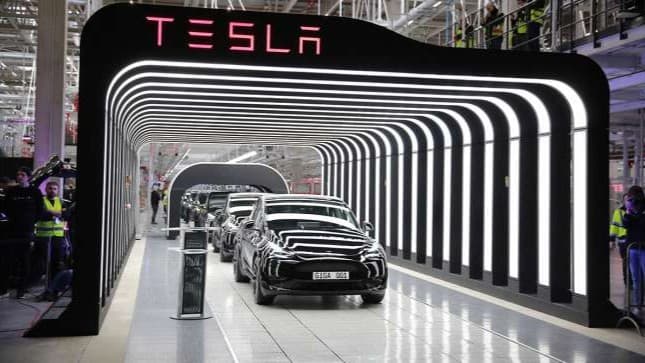
Tesla evolved from a risky startup into a global EV leader, reshaping the auto industry and the future of sustainable transport.
How Tesla Transformed: Startup to Success
Tesla was founded in July 2003 with an aim to build an electric car company that was
rooted in battery and technology innovation. After creating prototypes and models of
electric vehicles, and the founders having funded this with their own money and
government subsidies, they still needed significant external funding. Here, Elon Musk
invested US $6.5 million in Tesla and became its chairman. But they still struggled with low
volumes of sales and costly production. It was only after the Model S & then Model 3 were
announced, that the company’s revenue grew from millions to $21.5 billion in 2018, due to
the broader market reach and higher volume production. After becoming profitable in
2020, the brand became a symbol of the future involving electric mobility and clean energy,
which helped to attract both customers and investors.
Elon Musk’s Vision
A main force behind Tesla’s current success is Elon Musk’s leadership and storytelling. He
made it so Tesla wasn’t just selling cars but a mission instead. This was to accelerate the
world’s transition to sustainable energy through cars. From the beginning, he branded Tesla
not as a traditional carmaker but a revolutionary technology company. Notably, Musk
publicly framed each milestone: **the Roadster, Model S, Model X, and Model 3 **as steps in
his long-term master plan to make electric vehicles affordable and more mainstream.
Simultaneously, Tesla was a pioneer in using long-range lithium ion batteries and advanced
autopilot systems. These innovations, combined with Elon Musk’s messaging, set Tesla
apart from other companies.
Investor Faith
Tesla’s rise was fueled not just by financial performance but by a passionate community of
retail investors who saw the company’s potential, and decided to contribute. In fact, it’s
estimated that retail or individual investors hold around 34.3% of Tesla’s shares. This
loyalty helped support the company during difficult financial periods and amplified the
momentum as it grew to millions of customers, especially in the last decade, where Tesla
has seen unprecedented growth.
##Tesla’s Financial Growth
Tesla transformed from a loss-making startup into one of the most valuable companies in
the world, driven by rapid revenue growth, rising production volumes, and breakthrough
innovations. The company delivered record profits from 2020, with a $31.5 billion revenue,
which boosted accessibility for investors through high-profile stock splits in 2020 and 2022.
An example of this is in August 2020, where Tesla carried out a 5-for-1 split. The goal of this
is to encourage more shares to be bought through additional availability.
Market Influence
Tesla essentially pushed the entire car industry toward electrification. As Tesla’s sales and
global popularity surged in recent years, automakers accelerated their EV plans:
For example, Ford committed over $50 billion to EVs by 2026. Additionally, General Motors
stated they would only sell zero-emission vehicles by 2035. Countries also responded to
this innovation: Norway now sees more than 80% of new car sales coming from EVs, driven
by Tesla’s success focusing on electric mobility.
Public Criticism
Despite its record achievements, Tesla faces immense amounts of scrutiny and market
volatility. Critics argue its valuation often outpaced its production scale and profits, raising
concerns of whether the company is overvalued. One analysis by Simply Wall St found that
using a discounted cash flow (DCF) model, Tesla appeared overvalued by an estimated
230%. Leadership controversies include Musk’s public statements, and his focus on
ventures like X and SpaceX have sparked investor worries about distraction. In fact, in
2025, Musk announcing a new political party caused Tesla’s market value to drop by over
US $80 billion. This demonstrates how strongly the company’s market value depends on
his persona.
Conclusion
In conclusion, Tesla exemplifies how emotion, technological innovation, and stakeholder
faith hold as much influence as financial metrics do. The journey from being a startup to
the present day shows how belief in a vision can reshape industries, and redefine what
investor loyalty looks like. Whether this is seen as a risk or a force, Tesla has inevitably
changed the future of transportation.